Psychiatry is often the rotation where students finally get to sit down and really talk to patients. The interviews are long, the stories stick with you, and for once nobody is asking you to name the branches of the celiac trunk.
Then you do your first block of practice questions and realize the shelf is far more precise than the rotation feels. Was it 4 days of symptoms or a full week? Six months or one? Is this lithium toxicity or serotonin syndrome? The details that seem fuzzy on the unit are exactly what the exam tests.
If that gap feels frustrating, you're in good company. The psych shelf is very learnable, and because so much of it is rule-based, a focused plan goes a long way even on a short rotation.
How Do You Study for the Psychiatry Shelf?
The approach that works for most students: use one Step 2 CK-style question bank as your main resource, do roughly 20 to 40 questions a day, memorize DSM duration criteria and psychiatric medication side effects in your first week, and save NBME practice forms for the last 10 days. Psychiatry clerkships commonly run around 4 to 6 weeks, so there's not much room for a slow start. The upside is that the content is narrower than medicine or surgery, which means steady daily work covers a lot of ground.
The heart of how to study for psychiatry shelf exams is precision. Most questions come down to a timeline, a specific side effect, or the safest next step. Get those three things right and the rest falls into place.
What the Psychiatry Shelf Actually Tests
Diagnosis by Timeline
Many psych questions are really duration questions in disguise. Learn these cold:
| Diagnosis | Key duration (DSM-5) |
|---|---|
| Major depressive episode | At least 2 weeks (5 of 9 symptoms, including depressed mood or anhedonia) |
| Persistent depressive disorder | At least 2 years (1 year in children and adolescents) |
| Manic episode | At least 1 week, or any duration if hospitalization is needed |
| Hypomanic episode | At least 4 consecutive days |
| Brief psychotic disorder | At least 1 day, less than 1 month |
| Schizophreniform disorder | At least 1 month, less than 6 months |
| Schizophrenia | At least 6 months, including at least 1 month of active symptoms |
| Generalized anxiety disorder | At least 6 months |
| Acute stress disorder | 3 days to 1 month after the trauma |
| PTSD | More than 1 month |
| Adjustment disorder | Onset within 3 months of a stressor |
Questions will often give you a vivid presentation and quietly mention the duration in one sentence. Train yourself to find that sentence first.
Psychopharmacology and Side Effects
This is the other big pillar. A few that show up constantly:
- SSRIs are first-line for depression, generalized anxiety, OCD, and PTSD (alongside psychotherapy). Watch for sexual side effects and serotonin syndrome when combined with other serotonergic drugs.
- Bupropion lowers the seizure threshold, so avoid it in patients with seizures or eating disorders. It's a common pick when sexual side effects are the concern.
- Lithium causes tremor, hypothyroidism, and nephrogenic diabetes insipidus, and is associated with Ebstein anomaly. Thiazides, NSAIDs, and ACE inhibitors can raise levels into the toxic range.
- Clozapine is used for treatment-resistant schizophrenia and requires neutrophil count monitoring because of agranulocytosis risk.
- Valproate, carbamazepine, and lamotrigine each have signature risks: hepatotoxicity and neural tube defects with valproate, agranulocytosis and SIADH with carbamazepine, and Stevens-Johnson syndrome with lamotrigine.
Know the antipsychotic movement side effects by timing too: acute dystonia within hours to days, akathisia over days to weeks, and tardive dyskinesia after months to years.
Psychiatric Emergencies and Substances
Neuroleptic malignant syndrome versus serotonin syndrome is a favorite comparison. NMS develops over days with lead-pipe rigidity, high fever, altered mental status, and elevated CK. Serotonin syndrome develops over hours with hyperreflexia, clonus, and agitation. Substance intoxication and withdrawal are also heavily tested. Alcohol withdrawal is treated with benzodiazepines, and delirium tremens typically appears around 2 to 4 days after the last drink. Opioid withdrawal is miserable but rarely life-threatening; think dilated pupils, yawning, and diarrhea.
Where Psych Overlaps With Neuro, Peds, and Ethics
Expect delirium versus dementia, ADHD and autism, eating disorders, decision-making capacity, confidentiality, and suicide risk assessment. Always consider medical causes before a psychiatric diagnosis. A new-onset psychosis question may really be about thyroid disease, a medication, or a substance.
A 4-Week Psychiatry Shelf Study Plan
If your rotation is 6 weeks, stretch weeks 2 and 3 and keep the final week the same.
Week 1: Learn the Rules
- Start your question bank with psychiatry selected, around 20 questions a day.
- Write out the duration table above by hand, then quiz yourself on it daily until it's automatic.
- Make a one-page medication sheet: drug class, main use, and the one or two side effects the exam cares about.
Week 2: Build Volume
- Push toward 30 to 40 questions a day if your schedule allows, with full review of every explanation.
- Turn each miss into a short flashcard. Psych is ideal for spaced repetition because so much of it is crisp facts.
- Cover substances, emergencies, and child psychiatry, which students often leave until too late.
Week 3: First Practice Form
- Take an NBME Clinical Science Mastery Series form for Psychiatry: 50 questions, about 1 hour 15 minutes standard-paced, $21, with an approximate subject-exam score.
- Sort your misses into timeline errors, pharm errors, and next-step errors. That breakdown tells you exactly what to fix.
Week 4: Sharpen and Taper
- Take a second form early in the week to confirm your trend.
- Re-review your duration table, medication sheet, and flashcards every day.
- Keep the day before the exam light and get a full night of sleep.
Making the Most of Your Psych Rotation
Treat Every Interview Like a Question Stem
When you take a history, listen for the same details the shelf hides in its stems: how long symptoms have lasted, whether there's a substance involved, and whether a medical cause has been ruled out. Then try to name the diagnosis and next step before your resident does.
Practice the Mental Status Exam
Writing a clean MSE every day sharpens your vocabulary for affect, thought process, and thought content. Those terms appear constantly in shelf questions, and knowing them makes stems much faster to read.
Read Your Patients' Medication Lists
Every med list is a pharm review. If your patient is on lithium, look up what labs they need and what interactions to watch for. If they're on clozapine, check how their monitoring is set up. Real patients make side effects stick.
What Most Students Get Wrong About the Psychiatry Shelf
The first mistake is relying on the rotation alone. Psych rotations are rich in patient contact but often light on formal teaching, so students assume they've absorbed enough. The shelf demands precise timelines and pharmacology that daily clinical work doesn't always reinforce.
The second mistake is skipping the medical workup. When a question presents new psychiatric symptoms, the right answer is often to rule out a medical or substance-related cause first. Jumping straight to a psychiatric diagnosis is a classic trap.
The third mistake is forgetting safety. If a patient is at acute risk of harming themselves or someone else, ensuring safety comes before almost anything else on the answer list. Read every stem for those cues.
And finally, students underestimate how much psych overlaps with other shelves. Delirium, substance use, and depression appear on medicine, family medicine, and Step 2 CK too. Learning how to study for psychiatry shelf content well pays off across third year. For the full picture, see our shelf exam study guide by rotation.
Making Psych Prep Count Twice
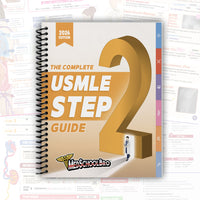
Whatever you settle on for how to study for psychiatry shelf prep, make it count twice. Psychiatry is part of Step 2 CK, so the questions you do now are a head start on dedicated. The Step 2 CK Question Bank from MedSchoolBro gives you 2,000+ NBME-style questions and 7 self-assessment forms to practice timelines, pharm, and next-step reasoning in exam format. Pair it with The Complete USMLE Step 2 Guide from MedSchoolBro, a 300-page hardcover plus eBook built for both shelf exams and Step 2 CK, when you want organized content review alongside your questions.
Frequently Asked Questions
Is the psychiatry shelf hard? Many students find it one of the more manageable shelves because the content is narrower. The difficulty comes from precision: duration criteria, specific side effects, and subtle next-step choices. If you memorize those early, the exam feels much more predictable.
How many questions should I do for the psych shelf? Most students aim for roughly 20 to 40 questions a day over the rotation, plus one or two NBME practice forms near the end. Careful review of each explanation matters more than total volume. Finishing fewer questions well beats rushing through more.
Do I need to memorize the DSM? Not the whole thing. Focus on the duration criteria, core symptom requirements for the major disorders, and the key exclusions, like ruling out substances and medical causes. That covers the large majority of diagnosis questions.
Does the psychiatry shelf help with Step 2 CK? Yes. Psychiatry is tested on Step 2 CK, and the same topics show up: timelines, psychopharmacology, substance use, and safety. Treat your psych prep as an early piece of your Step 2 CK foundation.