There's a version of this question that panics every first-year: are you already behind if you haven't started Step 1 prep? Then there's a version that panics every second-year heading into dedicated: is 5 weeks enough, or should it be 8? Do people really study 300+ hours for this thing?
Both anxieties come from the same confusion — treating "how long to study for Step 1" as one single number, when it's really two separate phases with two very different time investments.
Here's how to think about both.
How Long Should You Study for Step 1?
Most students should spend 5 to 8 weeks in dedicated, full-time Step 1 prep, following a longer stretch of light, longitudinal review during MS1 and MS2 alongside coursework. Combined, most students put somewhere between 250 and 400 total hours into Step 1 preparation by test day, split unevenly between the two phases — a smaller, steady trickle of hours over two years, followed by a much more intense 5-8 week sprint once preclinical coursework ends.
Waiting until dedicated to start any Step 1-specific studying means trying to build two years of foundation from scratch in a few weeks — technically possible, but unnecessarily brutal. Starting serious dedicated-style studying more than 10 weeks out, on the other hand, often leads to burnout and information you'll need to re-review anyway closer to your test date.
The real answer isn't a single number. It's knowing how much time belongs in each phase and what that phase should look like.
Phase One: Longitudinal Review During Preclinical Years
From the moment your coursework starts covering testable material — which, for most curricula, is essentially day one of MS1 — you should be doing something Step 1-adjacent, even if it's light. This doesn't mean full-time board prep in your first semester. It means using board-style resources alongside your coursework so the two reinforce each other instead of existing in separate silos.
What Longitudinal Review Should Actually Look Like
Spaced repetition (Anki or a similar system) started early and used consistently is the single highest-leverage habit here. Adding cards as you go through coursework, rather than building a massive backlog to review right before dedicated, keeps material genuinely retained rather than re-crammed. Pairing lecture content with a board-style question bank in small daily doses — even 10–20 questions a few times a week — builds the pattern recognition Step 1 actually tests, well before you're under time pressure.
The Mistake to Avoid in This Phase
Don't try to make every study session "Step 1 prep." Your coursework and your school's exams matter, and burning out on board content in MS1 before dedicated even exists is a real risk. The goal in this phase is consistency, not intensity — a sustainable habit that compounds over two years beats an intense but short-lived effort that fizzles by winter break.
Phase Two: Dedicated Prep
Dedicated is when Step 1 studying becomes your full-time job. For most students, this phase runs 5-8 weeks, though it varies by school and by how much of the longitudinal groundwork was already in place. If your longitudinal review was thin, lean toward the longer end of that range. If you've been consistent with Anki and questions throughout preclinical years, a tighter 5-6 week dedicated period is often enough.
How Many Hours Per Day Does That Actually Mean?
Most students studying full-time during dedicated put in 8-10 hours a day, which is where the 250-400 total hour range comes from when combined with two years of lighter longitudinal review. That said, total hours matter less than how those hours are spent — students who front-load content review and leave enough runway for question practice and full-length NBMEs tend to outperform students who simply log more hours without that structure.
How to Decide Your Dedicated Start Date
Work backward from your test date. Reserve your final 5–7 days for full-length NBMEs and targeted weak-area review. Reserve the middle stretch for heavy question volume with thorough explanation review. Use the earliest days of dedicated to reorganize and consolidate content you've already seen — not to learn it for the first time. If you find yourself needing to learn entirely new material more than two weeks into dedicated, that's a sign your longitudinal phase needs to start earlier next time (or, if you're already there, a sign to extend your timeline if your schedule allows it).
Starting Dedicated Too Early Has a Cost Too
More dedicated time isn't automatically better. Students who start dedicated 10+ weeks out often peak too early, then spend the final stretch re-reviewing content that's already fading rather than sharpening genuinely weak areas. A focused 6-week block usually outperforms a sprawling 10-week block for most students.
What Most Students Get Wrong About Timing
The most common mistake is treating "how long should I study for Step 1" as a single answer instead of two. Students either cram everything into dedicated because they didn't build a longitudinal habit, or they burn out trying to run a dedicated-intensity schedule for a full year before dedicated even begins.
The second mistake is copying someone else's timeline exactly. A classmate's 8-week dedicated block that worked well for them says very little about what you need — their longitudinal foundation, target score, and baseline going in were all different from yours.
The third mistake is underestimating how much your specific curriculum matters. Schools with integrated, board-aligned preclinical curricula set students up with a much stronger longitudinal foundation than schools with more traditional, discipline-based courses. Know which situation you're in, and adjust your dedicated timeline accordingly rather than assuming a generic 6 weeks will work the same way for everyone.
Building the Right Foundation From Day One
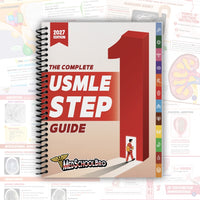
Whether you're just starting MS1 or already staring down dedicated, having a resource that works for both phases matters. The Step 1 Bundle from MedSchoolBro is organized by system and built for exactly this — light, high-yield review during preclinical years, and a focused, comprehensive resource to anchor your content review once dedicated starts. You're not switching tools halfway through; you're building on the same foundation the whole way.
Frequently Asked Questions
How many total hours should you study for Step 1? Most students put somewhere between 250 and 400 total hours into Step 1 prep, combining two years of light longitudinal review with a more intense 5-8 week dedicated period. The exact number matters less than how consistently those hours were spent — steady longitudinal habits plus a well-structured dedicated period beats a higher hour count with no clear plan.
How many weeks before Step 1 should dedicated studying start? Most students dedicate 5–8 weeks to full-time Step 1 prep before their test date. Students with a strong longitudinal foundation from preclinical years often do well with 5–6 weeks, while those starting with less prior review typically benefit from closer to 8 weeks.
What if I haven't done any Step 1 prep and dedicated is starting soon? It's not ideal, but it's workable — you'll just need to prioritize ruthlessly. Focus dedicated time on the highest-yield systems and diseases first, use NBME practice exams early to identify your biggest gaps, and consider whether your schedule allows extending dedicated by a week or two if you're starting further behind than planned.