If you’re starting Step 1 prep, you’ve probably heard two completely different stories at once: “Step 1 is pass/fail now, so it’s not a big deal,” and “People are still failing Step 1 like crazy.” Both can be true, and that’s exactly why this question matters.
So—is USMLE Step 1 pass or fail?
Yes. USMLE Step 1 is officially reported as Pass/Fail for exams taken on or after January 26, 2022. (If you took it before that date, you received both a 3-digit score and a pass/fail result.)
Here’s what that actually means in real life, and how to use it to your advantage.
What “Pass/Fail” Actually Means Now
Even though you don’t receive a 3-digit score anymore, Step 1 still uses a performance standard behind the scenes to decide Pass vs Fail. When Step 1 switched to pass/fail reporting, the passing standard increased from 194 to 196 on the old score scale. That’s one reason pass rates dipped after the change.
Your score report will show Pass or Fail (not a numerical score). If you fail, you can see information about your performance relative to the passing standard so you know where you were weak.
Why Step 1 Still Feels High-Stakes
Pass/Fail removed the “chase a 250” pressure, but it did not remove the risk. A failure is still reported and can hurt your residency application, because programs can see attempts even though they can’t see your numeric score. That’s why the goal is not “barely pass”—it’s “pass with a cushion.”
The other trap is psychological: some students study less because there’s no score to optimize, and that’s contributed to a real-world drop in pass rates since 2022. Step 1 is still a broad, integrated test of foundational sciences, so under-prepping is the fastest way to turn “pass/fail” into “fail.”
The Smart Way to Prepare (So You Don’t Become a Statistic)
If you want Step 1 to truly feel lower-stress, your prep has to be tighter and more structured—not looser. The highest-yield approach is simple:
- Build strong core frameworks (path + pharm + micro integration), because Step 1 rewards connections, not isolated facts.
- Do consistent active recall (questions + spaced repetition) so your “easy” points don’t evaporate under pressure.
- Use a visual system so you’re not drowning in 1,000 pages of text during dedicated.
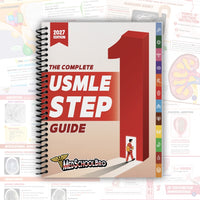
That’s exactly why the Complete USMLE Step 1 Bundle exists: it organizes the Step 1 basics into scannable, high-yield visuals so you can actually retain the content and walk into test day aiming for a comfortable Pass—not a prayer.
If you want, tell me your test date and whether you’re pre-dedicated or in dedicated, and I’ll outline a realistic 4–8 week Step 1 plan.