MedSchool Tips
Is a USMLE Step 1 Prep Course Worth It in a Pass/Fail World?
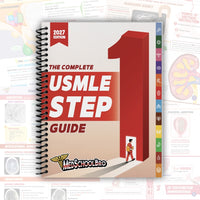
You've seen the ads. Live classes, 8-week intensives, polished study calendars, coaches who promise to keep you on track. Meanwhile your classmates swear they passed with a question bank, First Aid, and a lot of caffeine. So which group are you in? If you're staring at a dedicated period that feels huge and shapeless, wondering whether paying for a course is smart or just expensive anxiety relief, that's a reasonable thing to wonder. The good news is that this decision doesn't have to be a gut call. You can make it with real information about yourself, and this post shows you how. Is a USMLE Step 1 Prep Course Worth It? For most US MD and DO students taking Step 1 for the first time, a formal USMLE Step 1 prep course is optional, not essential. A strong question bank, one core content resource, and a few NBME self-assessments are enough for most people. A course earns its cost when you're repeating the exam, you're an IMG who has been away from basic science, or you know you won't follow a plan without outside structure. Here's why. Step 1 has been pass/fail since January 26, 2022, and the passing standard is 196 on the three-digit scale. According to usmle.org performance data for 2025, 93% of US MD first-takers and 89% of US DO first-takers passed. Those numbers drop sharply for other groups: 71% of US MD repeaters, 75% of non-US first-takers, and 54% of non-US repeaters passed. That gap is the whole story. If you're in a group that usually passes with self-study, a course mostly buys convenience. If you're in a group with lower pass rates, the structure, accountability and expert feedback a good course provides can matter a lot more. The Main Types of Step 1 Prep Courses "Prep course" covers a lot of very different products. Before you compare prices, figure out which format you're even shopping for. Format What You Get Best For Watch Out For Live online course Scheduled lectures, set study calendar, instructor Q and A Students who need external deadlines Lecture hours that crowd out question practice On-demand video course Recorded lectures you watch on your own time Students who want content review but flexible hours Easy to fall behind with no one checking In-person intensive Full-day structured program, often for several weeks Repeaters and IMGs who need total immersion Travel, housing and time away from home Self-study + QBank Question bank, content resource, self-assessments, your own schedule Most first-time US students Requires discipline and honest self-review Notice that every format still runs on questions. No lecture series replaces doing thousands of NBME-style items and reviewing them carefully. A course is a wrapper around that work, not a substitute for it. Who Benefits Most From a Step 1 Course? Students Retaking Step 1 If you've already failed once, doing the exact same thing again is the riskiest plan available. A course can force a reset: new schedule, new accountability, and someone outside your own head reading your score report. Also keep the rules in mind. You can take the same Step no more than 3 times within 12 months, with a total limit of 4 attempts per Step. That makes each attempt worth protecting. Our guide to retaking USMLE Step 1 covers the full process. International Medical Graduates Many IMGs are studying years after their basic science courses, sometimes while working, and the NBME question style may be unfamiliar. A structured course can rebuild foundations in the order Step 1 expects. IMGs also face more logistics: registration through FSMB's USMLE portal, the same $695 base exam fee, and possibly a region fee for testing outside the US and Canada. Students Who Need Structure Some people work best when someone else sets the calendar. If you've tried self-directed plans before and abandoned them in week two, that's useful information, not a character flaw. Paying for accountability can be a smart purchase. Who Usually Doesn't Need One If you're a US student with solid preclinical grades, a self-assessment showing a comfortable pass likelihood, and a track record of sticking to plans, a full course is probably more than you need. Put that money and time toward questions and self-assessments. What to Look For (and the Cost Questions to Ask) Green Flags in Any Step 1 Course NBME-style questions at the center. Lecture-heavy programs feel productive but often leave too little time for practice. Built-in diagnostics. You should get a baseline early and repeat checkpoints, with clear reports on your weak systems and disciplines. A schedule tied to your test date. Generic calendars don't account for your weak areas or your eligibility period. Real feedback. Someone should look at your misses and tell you whether it's a knowledge gap, a reasoning gap, or a test-taking problem. Cost Questions to Ask Before You Pay Prices across courses vary enormously, so compare total value instead of the sticker price. Ask: How long does access last, and what does an extension cost if my exam moves? Are a question bank and practice exams included, or sold separately? Does the price include NBME self-assessments? The official CBSSA forms start at $62 each, so that adds up. What's the refund or pause policy if I need to postpone? Is there a pass promise or a free repeat policy, and what are the fine print conditions? Read these carefully. A free second run of a course is not much comfort if it costs you another exam attempt. Remember the fixed costs too. The Step 1 exam fee is $695, and Prometric charges a fee to move your appointment within 45 days of the test, starting at $35 and rising as the date gets closer. A course that encourages you to reschedule repeatedly can quietly raise your total bill. For a full breakdown, see our post on USMLE Step 1 cost. How to Decide: Start With a Baseline The fastest way to make this decision is to stop guessing and get data. Take a timed diagnostic. Start with the free Step 1 Free 120 diagnostic on MedSchoolGuru. It's MedSchoolGuru's own question set, separate from the official NBME Free 120, and it gives you a scaled score estimate and a pass likelihood. All you need is a free account. Look at the pattern, not only the number. Are you missing questions across every system, or clustered in two or three areas? Scattered misses suggest you need a broad structured review. Clustered misses suggest targeted self-study. Check your track record. Be honest about whether you've followed a self-made schedule before. Confirm with an NBME self-assessment. A CBSSA gives an estimated probability of passing Step 1. If that looks comfortable, you likely don't need a full course. Decide on a format. If you need help, choose the lightest option that fixes your actual problem. Accountability issues might only need a study group or a tutor. Big content gaps might justify a full course. What Most Students Get Wrong About Step 1 Prep Courses The biggest mistake is buying a course to make anxiety go away. It feels good to hand your schedule to someone else, but if the program doesn't match your weaknesses, you'll spend weeks watching lectures on topics you already know. The second mistake is treating lecture time as study time. Watching an expert explain the coagulation cascade feels like learning. Getting a coagulation question wrong, figuring out why, and getting the next one right is learning. Any USMLE Step 1 prep course worth your money should have you doing questions every single day. The third mistake is skipping the baseline. Students sign up for an 8-week program before they know whether they need 4 weeks of polish or 12 weeks of rebuilding. A single diagnostic block can save you a lot of money and time. And finally, people forget that pass/fail cuts both ways. You don't need a high score, but you do need to pass, and a failure stays on your record. So the goal isn't the fanciest prep. It's the most reliable path to a pass for your specific situation. Build Your Own Step 1 Course Around a Strong QBank If your baseline shows you can do this without a formal course, you still need the core pieces. The Step 1 Question Bank from MedSchoolBro gives you 2,000+ NBME-style questions, CBSE-style diagnostic self-assessments with score reports, clinical-reasoning walkthroughs, and the Step 1 eBook included, with 365 days of access for $399. If you want structured content review alongside your questions, the Complete Step 1 Bundle from MedSchoolBro pairs the QBank with The Complete USMLE Step 1 Guide and the USMLE Flashcards for $349. Not sure yet? Start with the free Step 1 Free 120 diagnostic on MedSchoolGuru and let your results guide the next step. Frequently Asked Questions Do I need a prep course to pass Step 1? Most US first-time test takers pass without one. According to usmle.org, 93% of US MD and 89% of US DO first-takers passed in 2025. A course becomes more valuable if you're repeating, studying as an IMG, or need outside structure. Is a prep course worth it for an IMG? It can be, especially if you've been away from basic science for a while or you're new to NBME-style questions. Non-US first-takers had a 75% pass rate in 2025, so extra structure can help. Take a diagnostic first so you know which kind of help you need. Should I take a course if I failed Step 1? A course or tutor is often a good idea after a failed attempt, because repeating the same approach is risky. Look for one built on diagnostics and personalized feedback, not just lectures. Make sure your study timeline also fits the USMLE retake rules. How long should a Step 1 course last? That depends on your baseline. Students close to passing may only need a few weeks of focused practice, while students rebuilding content may need a few months. Choose the length after a diagnostic, not before.
Learn moreHow to Study Psychology and Sociology for the MCAT: A 7-Step Plan
Psych/soc has a strange reputation. Some people call it the "easy" section and save it for last. Others take their first practice test, see a lower score than expected, and realize the section is a lot more specific than "common sense about people." Both reactions are understandable. If you never took a psychology or sociology class, the sheer number of terms can feel endless. If you did, it's easy to assume you already know it, right up until two answer choices both sound reasonable and only one matches the precise definition. The good news is that psych/soc rewards a clear system more than almost any other section. Here's exactly how to study psychology and sociology for the MCAT, step by step. How Do You Study Psychology and Sociology for the MCAT? The most effective approach is to work from the AAMC content outline, learn every term with a concrete example, drill those terms daily with spaced repetition, and start practice passages early so you learn how the section applies definitions in context. That's the core of how to study psychology and sociology for the MCAT. The section itself is officially called Psychological, Social, and Biological Foundations of Behavior. It's 59 questions in 95 minutes, scored from 118 to 132 like every other section. Per the AAMC's content breakdown, it's roughly 65% psychology, 30% sociology, and 5% biology, organized under five foundational concepts (6 through 10) covering perception and behavior, the self and others, and social structure and inequality. Unlike Chem/Phys or Bio/Biochem, psych/soc is mostly a vocabulary-and-application section. Your score depends on knowing a large set of terms precisely and recognizing them inside research-style passages. Building Your Psych/Soc Foundation Step 1: Start With the AAMC Content Outline The AAMC publishes the full list of topics the section can test in its free "What's on the MCAT Exam?" content outline. Print it or keep it open while you study. It's your checklist for what's fair game, and it keeps you from wandering into psychology trivia the exam doesn't cover. Step 2: Do One Focused Content Pass Pick one primary resource and go through it once, thoroughly. Many students use Khan Academy's MCAT psych/soc videos or the widely shared summary document built from them, while others use a single content book. What matters is finishing one resource rather than bouncing between three. If you took intro psych or sociology in college, you can move faster, but don't skip the pass. The MCAT's definitions are often narrower than what you learned in class. Step 3: Learn Every Term With an Example Definitions alone won't carry you. The MCAT rarely asks "what is the definition of X?" Instead, it describes a person or study and asks which concept it illustrates. For every term, write a one-line example of what it looks like in real life. If you can't produce an example, you don't know the term well enough yet. Pay special attention to commonly confused pairs, because that's exactly where wrong answer choices come from: Social facilitation vs. social loafing: performing better on simple tasks in front of others vs. putting in less effort in a group. Fundamental attribution error vs. actor-observer bias: overemphasizing other people's dispositions vs. explaining your own behavior by situation but others' by disposition. Negative reinforcement vs. punishment: removing something unpleasant to increase a behavior vs. any consequence that decreases a behavior. Role conflict vs. role strain: tension between two different roles vs. tension within a single role. Proactive vs. retroactive interference: old information disrupting new learning vs. new information disrupting old memories. Making It Stick and Applying It Step 4: Drill Terms Daily With Spaced Repetition Psych/soc is the section where flashcards pay off most. Put terms into Anki (or another spaced repetition tool) as you learn them, and review every day. Many students use a premade psych/soc deck as a base and add cards for terms they miss in practice. Keep each card to one concept, and put your example on the back alongside the definition. Step 5: Master Research Methods and Statistics A big part of this section is reading studies. You'll need to identify independent and dependent variables, spot confounds, distinguish correlation from causation, and understand concepts like reliability, validity, and statistical significance. Know the major study designs (experimental, correlational, longitudinal, cross-sectional) and the ethical principles behind research with human participants. These skills also help in Bio/Biochem, so the time pays off twice. Step 6: Start Practice Passages Early Don't wait until content is "done" to start passages. Begin a few weeks into content review, so you learn how the MCAT frames terms in context. Later in your prep, the official AAMC materials (section bank, question packs, and full-length practice exams) are the most realistic practice available for this section's style. Step 7: Review Every Miss by Category When you miss a question, figure out why. Was it a content gap (you didn't know the term)? A precision error (you knew a related term and mixed them up)? A passage error (the answer was in the passage and you missed it)? Or a common-sense trap (you picked what sounded reasonable instead of what the definition supports)? Each type has a different fix, and tracking them shows you where your points are actually going. High-Yield Topic Areas to Prioritize Everything on the outline is testable, but a few areas come up often enough to deserve extra attention: Learning and memory: classical and operant conditioning, reinforcement schedules, observational learning, encoding, retrieval, and forgetting. Development and personality: major theorists like Piaget, Erikson, Kohlberg, and Freud, plus the main personality perspectives. Emotion and stress: the James-Lange, Cannon-Bard, and Schachter-Singer theories of emotion, and stress responses. Social psychology: attribution, conformity, obedience, group processes, attitudes, and prejudice. Sociological theory: functionalism, conflict theory, symbolic interactionism, and social constructionism. Social structure and inequality: socioeconomic status, social mobility, demographics, and health disparities. Sensation, perception, and the nervous system: where the biology slice lives, including thresholds, signal detection, and brain regions. Once you have these down, scoring well here can meaningfully lift your total score. If you want a sense of where section scores fall, our guide to MCAT score percentiles breaks it down. What Most Students Get Wrong About Psych/Soc The biggest mistake is assuming it's common sense. Psych/soc questions are written so that the intuitive answer is often a trap. The right answer matches the textbook definition, even when another choice sounds more reasonable in everyday terms. The second mistake is studying it last. Students save psych/soc for the final few weeks, then realize there are far more terms than they expected. Because so much of this section is memorization, it benefits from spaced repetition over a longer period. Starting your term drilling early in your timeline is one of the best decisions you can make. The third mistake is over-memorizing and under-practicing. Some students learn hundreds of definitions perfectly but still struggle because they never practiced recognizing those concepts inside passages. Knowing how to study psychology and sociology for the MCAT means balancing both: precise terms and plenty of application. Turning Terms Into Points Once you've built your term base, the fastest way to see how well it holds up is practice in the same format as the real exam. The MCAT Question Bank from MedSchoolBro gives you 3,000+ AAMC-style questions and 4 full-length exams, so you can practice spotting psych/soc concepts inside passages and track which categories you keep missing before test day. Frequently Asked Questions How long does it take to study psych/soc for the MCAT? It depends on your background. Students who took psychology and sociology in college can often cover the content in a few focused weeks, while those starting from scratch usually need longer. Either way, keep reviewing terms with spaced repetition throughout your entire prep, not just during the content phase. Do I need to take psychology and sociology classes before the MCAT? Not necessarily. Many students learn psych/soc entirely through self-study, since the content is less cumulative than chemistry or physics. A class can help, but focused content review plus daily term drilling and practice passages is enough for many students. Is the Khan Academy psych/soc material enough? It's a strong content foundation that many students rely on, but it's only one piece. You'll still need spaced repetition for retention and plenty of practice passages, especially official AAMC material, to learn how the exam applies the terms. Is psych/soc the easiest MCAT section? It feels more approachable to many students because it's less math-heavy, but it isn't automatically easy. The volume of terms and the precision the questions require catch a lot of people off guard. Treat it with the same structure you'd give any science section.
Learn moreHow to Use Anki for the MCAT: A Step-by-Step Setup That Won't Bury You in Reviews
Everyone tells you to use Anki for the MCAT. Then you download it, import a deck with thousands of cards, hit "study," and two weeks later you're staring at 600 due reviews wondering how anyone does this and still has time for practice passages. If that's you, you didn't fail at Anki. You just started without a plan, which is how almost everyone starts. Anki is one of the most effective tools you can use for MCAT content, but only when it's set up to support your prep instead of becoming your prep. Here's how to do that. How Should You Use Anki for the MCAT? The short answer: use Anki for the facts you need to recall instantly (terms, equations, amino acids, pathways, psych/soc definitions), unlock cards only as you cover the matching content, do your reviews every single day, and cap new cards at a number you can sustain, usually somewhere in the 20–50 new cards per day range depending on your timeline. Anki is for memorization. Practice passages are for reasoning. You need both, and Anki should never eat the time meant for the second one. The reason Anki works is spaced repetition. It shows you a card right before you're likely to forget it, so each review strengthens the memory with less total effort than rereading. The catch is that it only works if you show up daily. Skip three days, and the backlog compounds fast. Below is the step-by-step process for how to use Anki for the MCAT, from setup to test day. Setting Up Anki the Right Way Step 1: Choose Premade, Custom, or a Mix Premade community decks (MileDown's MCAT deck is one of the most widely recommended, and there are well-known psych/soc-specific decks too) save you dozens of hours of card writing and already cover the AAMC content outline in detail. Making your own cards takes longer but forces you to process the material, which helps it stick. For most students, a mix works best: use a premade deck as your backbone, then add your own cards for concepts you miss in practice questions. Those custom cards often end up being the most valuable cards you own, because they target your specific gaps. Step 2: Suspend Everything, Then Unsuspend as You Learn This is the step that saves most students. When you import a big premade deck, suspend all of it. Then, as you finish each content chapter or video, find the cards that match (most premade decks are tagged by subject) and unsuspend only those. That way you're reviewing material you've actually learned, not trying to memorize facts with no context. Step 3: Get Your Settings in Order You don't need to obsess over settings, but a few matter: New cards per day: Anki's default is 20. That's a good starting point with a longer timeline. With a shorter runway, you may need more, but raise it gradually. Maximum reviews per day: Set it high enough that Anki isn't hiding due cards from you. A capped review count just pushes the backlog to tomorrow. Scheduler: Recent versions of Anki include the FSRS scheduler, which lets you set a target retention (around 90% is a sensible default). It's worth turning on if you're starting fresh. Using Anki Day to Day Step 4: Do Reviews First, Every Day Make Anki the first thing you do in your study day, before content or practice. Reviews are the non-negotiable part. New cards are optional on a rough day, reviews are not. A rough rule of thumb: once you're a few weeks in, daily reviews tend to settle at several times your daily new-card count, so plan your new cards around the review load you can actually handle. Step 5: Grade Yourself Honestly Use "Again" when you didn't truly know it, even if you were close. Hitting "Good" on a half-remembered card feels better today but leaves gaps that show up on test day. And avoid overusing "Easy," which pushes cards far into the future. When in doubt, "Again" or "Good" is all you need. Step 6: Write Better Cards If you make your own cards, keep each one to a single fact. Cloze deletions work great for definitions and pathway steps ("Pyruvate carboxylase requires {{c1::biotin}}"). Avoid cards that ask you to list seven things at once, since you'll keep failing them and they'll drag down your whole review session. Images help for structures, graphs, and anatomy, and Anki now includes built-in image occlusion for labeling diagrams. Step 7: Deal With Leeches Instead of Ignoring Them Leeches are cards you keep failing. Anki tags them automatically. Don't just keep grinding them. Rewrite the card, break it into smaller cards, or go back to the source material, because a card you keep failing usually means you never understood the concept in the first place. How Anki Fits Into Your Full MCAT Timeline Content Review Phase This is when Anki does its heaviest lifting. You're unsuspending cards chapter by chapter, adding new cards daily, and building a large base of facts. Expect Anki to take a meaningful chunk of each day here, and pair it with some practice passages so you're not only memorizing. Practice Phase Once content is mostly done, slow down or stop adding new premade cards. Your main source of new cards should now be the questions you miss. Keep up with reviews, but your study time should shift heavily toward passages and full-length practice exams. The Final Weeks In the last couple of weeks, stop adding new cards entirely. New cards create future reviews you won't need after test day. Keep doing your daily reviews to keep everything fresh, and let practice exams and their review take priority. If you're also planning ahead to boards, a lot of this carries over. Our guide on how to use Anki for Step 1 covers how the same habits scale up in med school. What Most Students Get Wrong About Anki The biggest mistake students make when figuring out how to use Anki for the MCAT is treating it as studying instead of as a memory tool. Hitting a perfect review streak feels productive, but the MCAT is a passage-based reasoning exam. If Anki is taking so much of your day that you aren't doing passages, you're optimizing the wrong thing. The second mistake is adding cards too fast. Unlocking a huge chunk of a premade deck in week one feels efficient, until the review pile arrives a few weeks later. Steady, sustainable new-card counts beat big bursts every time. The third mistake is skipping days. One missed day is fine. Three missed days creates a backlog that feels impossible, and that's when most students quit Anki entirely. If you fall behind, pause new cards and chip away at reviews until you're caught up, rather than starting over or giving up. Making Daily Reviews Easier to Stick With The hardest part of learning how to use Anki for the MCAT isn't the setup, it's showing up every day for hundreds of reviews. Anything that makes those sessions less of a grind helps. The Anki Clicker from MedSchoolBro lets you flip and grade cards with a handheld clicker, so you can get through reviews without being hunched over your keyboard. And if you'd like a visual complement to your digital deck, the MCAT Flashcard Set from MedSchoolBro gives you 477 illustrated cards for high-yield concepts you can flip through away from a screen. Frequently Asked Questions How many Anki cards should I do a day for the MCAT? Most students land somewhere around 20–50 new cards per day, depending on how much time they have before the exam. The right number is whatever keeps your daily reviews manageable alongside practice passages. If reviews start taking over your day, cut new cards first. Should I use a premade Anki deck or make my own for the MCAT? A premade deck saves enormous time and covers the content outline thoroughly, so most students use one as a base. Adding your own cards from missed practice questions makes your deck more personalized and effective. A mix of both works best for most people. When should I stop adding new Anki cards before the MCAT? Stop adding new cards in the last couple of weeks before your exam. Newly added cards generate reviews that pile up after test day. Use that final stretch for daily reviews, full-length practice exams, and targeted review of weak areas. Is Anki enough to do well on the MCAT? No. Anki is excellent for memorizing facts, but the MCAT tests applying those facts in passages. You still need content review to understand concepts and plenty of practice questions and full-lengths to build test-taking skills.
Learn moreGluconeogenesis MCAT Review: Bypass Enzymes, Substrates, and Regulation
Gluconeogenesis has a reputation as "glycolysis, but backwards," and that reputation is exactly why students lose points on it. You learn glycolysis first, you feel pretty good about it, and then gluconeogenesis shows up with different enzymes, different compartments, and a regulation scheme that seems designed to confuse you. If you've ever stared at a pathway diagram and wondered which arrows actually matter, that's normal. Most of the pathway really is shared with glycolysis. The MCAT just cares a lot about the few places where it isn't. So let's focus on those places, plus the "why" behind them, because the why is what gets tested. What Do You Need to Know About Gluconeogenesis for the MCAT? For the MCAT, focus on four things: the four bypass enzymes (pyruvate carboxylase, PEP carboxykinase, fructose-1,6-bisphosphatase, and glucose-6-phosphatase), the main substrates (lactate, alanine and other glucogenic amino acids, and glycerol), where it happens (mainly the liver, with help from the kidney cortex), and how it's regulated (glucagon and cortisol turn it on, insulin turns it off, and fructose-2,6-bisphosphate flips the switch between glycolysis and gluconeogenesis). The big picture: gluconeogenesis builds new glucose from non-carbohydrate precursors when blood glucose is low and glycogen is running out. Seven of glycolysis's ten steps are reversible and get reused. The other three (hexokinase, phosphofructokinase-1, and pyruvate kinase) are irreversible, so gluconeogenesis has to go around them with its own enzymes. Those detours are the core of almost every gluconeogenesis MCAT question you'll see. The Four Bypass Enzymes A classic mnemonic for the four enzymes in order: "Pathway Produces Fresh Glucose" (Pyruvate carboxylase, PEPCK, Fructose-1,6-bisphosphatase, Glucose-6-phosphatase). Glycolysis step it bypasses Gluconeogenesis enzyme(s) Location Key detail Pyruvate kinase Pyruvate carboxylase, then PEPCK Mitochondria, then cytosol (PEPCK also has a mitochondrial form) Needs biotin, ATP, and GTP; activated by acetyl-CoA Phosphofructokinase-1 Fructose-1,6-bisphosphatase Cytosol Main control point; inhibited by AMP and fructose-2,6-bisphosphate Hexokinase / glucokinase Glucose-6-phosphatase Endoplasmic reticulum (lumen) Found in liver and kidney, not muscle Bypass 1: Pyruvate to PEP (Two Steps) Pyruvate kinase can't run in reverse, so the cell takes a two-step detour. First, pyruvate carboxylase in the mitochondrial matrix adds CO2 to pyruvate to make oxaloacetate. It uses ATP and requires biotin as a cofactor, and it's allosterically activated by acetyl-CoA. That activation makes sense: lots of acetyl-CoA means plenty of fatty acid breakdown, so the cell has energy to spare and can afford to make glucose. Second, phosphoenolpyruvate carboxykinase (PEPCK) decarboxylates and phosphorylates oxaloacetate to form PEP, using GTP. Since oxaloacetate can't cross the inner mitochondrial membrane directly, it's usually reduced to malate, shipped to the cytosol, and oxidized back to oxaloacetate. That trip also generates cytosolic NADH, which the pathway needs later at the glyceraldehyde-3-phosphate dehydrogenase step. Bypass 2: Fructose-1,6-Bisphosphate to Fructose-6-Phosphate Fructose-1,6-bisphosphatase removes a phosphate in the cytosol, bypassing PFK-1. This is the key regulated step of gluconeogenesis, mirroring PFK-1's role as the key regulated step of glycolysis. It's inhibited by AMP (low energy, so don't spend ATP making glucose) and by fructose-2,6-bisphosphate. Bypass 3: Glucose-6-Phosphate to Glucose Glucose-6-phosphatase sits in the endoplasmic reticulum and removes the final phosphate so free glucose can leave the cell. It's present in the liver and kidney but absent in skeletal muscle, which is why muscle can't release glucose into the blood even from its own glycogen. A deficiency causes von Gierke disease (glycogen storage disease type I), with severe fasting hypoglycemia and lactic acidosis, a nice example of the MCAT linking enzymes to physiology. The Energy Cost Making one glucose from two pyruvate costs 4 ATP, 2 GTP, and 2 NADH. Compare that to the net 2 ATP glycolysis produces, and you can see why gluconeogenesis is tightly controlled. Running both pathways at full speed at the same time would just burn ATP for nothing (a futile cycle). Where Gluconeogenesis Happens Tissues The liver does most of the work. The kidney cortex contributes as well, and its share grows during prolonged fasting. Skeletal muscle and the brain don't supply glucose to the blood through gluconeogenesis. The brain and red blood cells are the main consumers that this whole pathway exists to protect. Compartments Gluconeogenesis spans three cellular locations, which the MCAT likes to test directly: pyruvate carboxylase in the mitochondria, most of the pathway in the cytosol, and glucose-6-phosphatase in the ER. If an answer choice says gluconeogenesis happens "entirely in the cytosol," it's wrong. Timing During Fasting Right after a meal, insulin is high and gluconeogenesis is low. In the hours after a meal and overnight, liver glycogen breakdown supplies much of the blood glucose while gluconeogenesis ramps up. Once liver glycogen is largely depleted, roughly a day into a fast, gluconeogenesis becomes the main source of new glucose. In prolonged starvation, the brain shifts toward ketone bodies, which reduces how much glucose the body has to make and spares muscle protein. What Gluconeogenesis Is Made From Lactate and the Cori Cycle Red blood cells (no mitochondria) and exercising muscle produce lactate. Lactate travels to the liver, where lactate dehydrogenase converts it back to pyruvate, and gluconeogenesis turns it into glucose that returns to the tissues. That loop is the Cori cycle. It costs the liver more ATP than glycolysis produces in the muscle, so it's a net energy expense for the body. Alanine and Other Glucogenic Amino Acids In the glucose-alanine cycle, muscle converts pyruvate to alanine by transamination, sends it to the liver, and the liver converts it back to pyruvate. As a bonus, this moves nitrogen to the liver for the urea cycle. Other glucogenic amino acids enter as pyruvate or as TCA intermediates that become oxaloacetate. Leucine and lysine are purely ketogenic and can't be used. Glycerol When triglycerides are broken down in adipose tissue, the glycerol backbone goes to the liver. Glycerol kinase phosphorylates it to glycerol-3-phosphate, which is oxidized to DHAP and enters the pathway at the triose phosphate level. What Can't Be Used: Even-Chain Fatty Acids This is a favorite trap. Even-chain fatty acids cannot produce a net gain of glucose. Their breakdown yields acetyl-CoA, and pyruvate dehydrogenase is irreversible, so acetyl-CoA can't become pyruvate. Acetyl-CoA entering the TCA cycle loses two carbons as CO2, so there's no net oxaloacetate gained either. The exception is odd-chain fatty acids, whose final propionyl-CoA becomes succinyl-CoA (a step that requires vitamin B12) and can feed gluconeogenesis. Fatty acid oxidation still helps indirectly by supplying ATP and the acetyl-CoA that activates pyruvate carboxylase. How Gluconeogenesis Is Regulated Hormonal Control Glucagon (and epinephrine) raise cAMP and activate protein kinase A in the liver. PKA does two important things: it lowers fructose-2,6-bisphosphate levels by phosphorylating the bifunctional enzyme PFK-2/FBPase-2, and it inactivates liver pyruvate kinase. Both changes favor gluconeogenesis over glycolysis. Cortisol increases transcription of gluconeogenic enzymes like PEPCK and mobilizes amino acids from muscle. Insulin does the opposite on every front. Fructose-2,6-Bisphosphate: The Switch Fructose-2,6-bisphosphate activates PFK-1 and inhibits fructose-1,6-bisphosphatase. High levels (fed state, insulin) push the liver toward glycolysis. Low levels (fasting, glucagon) push it toward gluconeogenesis. If you understand this one molecule, you understand reciprocal regulation. Allosteric Signals Acetyl-CoA activates pyruvate carboxylase and inhibits pyruvate dehydrogenase, steering pyruvate toward glucose instead of the TCA cycle. AMP inhibits fructose-1,6-bisphosphatase while activating PFK-1. The logic is always the same: low energy favors glycolysis, high energy and low blood glucose favor gluconeogenesis. What Most Students Get Wrong About Gluconeogenesis The biggest mistake is treating it as glycolysis in reverse and stopping there. Gluconeogenesis MCAT questions rarely ask about the shared reversible steps. They ask about the bypass enzymes, where they are, and what controls them. The second mistake is the fatty acid trap. Students know fat is stored energy, so they assume it can become glucose. Even-chain fatty acids can't make net glucose, but glycerol and odd-chain fatty acids can. Expect answer choices built around that exact distinction. The third mistake is forgetting tissue differences. Muscle lacks glucose-6-phosphatase, so it can't export glucose. The liver can. When a passage mentions a muscle-specific enzyme deficiency versus a liver one, that difference usually decides the answer. A related classic: heavy alcohol use raises the NADH/NAD+ ratio, which pushes pyruvate toward lactate and oxaloacetate toward malate, starving gluconeogenesis and causing hypoglycemia. Making Metabolic Pathways Stick Gluconeogenesis is a pathway you need to recall fast and apply under pressure, which is exactly where visual, repeated review pays off. The MCAT Flashcard Set from MedSchoolBro gives you 477 illustrated cards, so enzymes, regulators, and pathway connections become pictures you can recall instead of lists you reread. When you're ready to test that recall in passage format, the MCAT Question Bank from MedSchoolBro has 3,000+ AAMC-style questions to practice applying metabolism under real test conditions. Frequently Asked Questions What is the rate-limiting enzyme of gluconeogenesis? Fructose-1,6-bisphosphatase is generally taught as the key regulated (rate-limiting) step. It's inhibited by AMP and fructose-2,6-bisphosphate, and it mirrors PFK-1 in glycolysis. Pyruvate carboxylase is also heavily regulated, mainly through activation by acetyl-CoA. Can fatty acids be converted into glucose? Not even-chain fatty acids, because their acetyl-CoA can't be converted back to pyruvate and gives no net oxaloacetate in the TCA cycle. Odd-chain fatty acids can contribute through propionyl-CoA, and the glycerol from triglycerides is a genuine gluconeogenic substrate. On the MCAT, "fat can't become glucose" really means even-chain fatty acids. Why can't muscle perform gluconeogenesis to raise blood glucose? Muscle lacks glucose-6-phosphatase, so it can't remove the final phosphate and release free glucose into the blood. Instead, muscle sends lactate and alanine to the liver, which does the gluconeogenesis. That's the whole point of the Cori and glucose-alanine cycles. How does gluconeogenesis connect to glycogen metabolism? Both maintain blood glucose during fasting and are activated by glucagon. Glycogen breakdown handles the early hours, and gluconeogenesis takes over as liver glycogen runs low. Gluconeogenesis MCAT questions often ask which source dominates at a given point in a fast, so know the general timeline.
Learn moreThe Best MCAT Prep Books (and How to Pick the Right Ones for You)
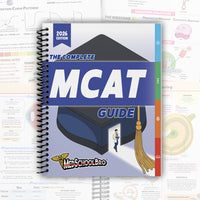
You search "best MCAT prep books," open three Reddit threads, and walk away with fourteen recommendations, two of which directly contradict each other. Someone swears by a massive box set. Someone else says books are a waste and you should just do questions. Your cart is full and you haven't studied a single page. That feeling is incredibly common, and it's not a sign you're bad at this. It's a sign that most advice about MCAT books skips the most important question: what do you actually need a book to do? Let's answer that first, then talk about what's worth buying. What Are the Best MCAT Prep Books? For most students, the best setup is simple: one comprehensive content-review resource, the official AAMC practice materials, and a dedicated source of practice questions. That's it. You don't need three competing book sets, and owning more content review rarely translates into a higher score. The rule of thumb is one primary content source, read actively, then a hard pivot to practice. Which content resource is "best" depends on three things: how much time you have, how strong your science foundation already is, and whether you learn better from dense text or from visual, condensed review. The best MCAT prep books for a biology major with six months are not the same as the best ones for a career-changer with three months and a full-time job. And no matter which book you pick, the official AAMC materials are non-negotiable. They're written by the people who write the test, and nothing else simulates the real exam's reasoning style as closely. The Main Types of MCAT Prep Books Multi-Volume Subject Review Sets These are the big box sets you've seen recommended everywhere, with a separate book for each subject (biology, biochemistry, general chemistry, organic chemistry, physics, psychology/sociology, and CARS). Kaplan, The Princeton Review, and Examkrackers are the names you'll see most often. They're thorough and detailed, which makes them great as a reference. The tradeoff is volume: reading every page of a full set takes a long time, and many students burn weeks on content review they didn't need. Single-Volume Comprehensive Guides A single guide condenses the high-yield content across all sections into one book. This works well if you already have a decent science base and want to review efficiently rather than relearn every course from scratch. It's also easier to actually finish, which matters more than people admit. A book you complete beats a set you abandon halfway through organic chemistry. Practice Question Books Some books are just passages and questions, organized by subject. They're useful for targeted practice in a weak area, but if you're also using an online question bank, there's a lot of overlap. Pick one primary question source and go deep with it. CARS-Specific Practice CARS isn't really a content section, so "studying" it from a content book doesn't do much. What helps is a steady supply of practice passages and careful review of why each wrong answer is wrong. If CARS is your weakest section, prioritize practice passages over any CARS strategy book. Official AAMC Materials The AAMC sells its own prep (available through store.aamc.org), including the Official Guide to the MCAT Exam, question packs, section bank questions, and full-length practice exams. These aren't content review, so they won't teach you the science. What they do is show you exactly how the test thinks, and that makes them the most valuable practice you can buy. Save the full-length exams for the later part of your prep, once your content is in place. How to Choose the Right Books for Your Situation Start With a Diagnostic Before buying anything, take a diagnostic or a timed practice section. The free MCAT full-length on MedSchoolGuru works well here: it gives you a scaled score and percentile at no cost. Your results tell you what kind of help you need. Big gaps across multiple sciences point toward a more detailed resource. A solid baseline with a few weak spots points toward a condensed guide plus targeted practice. Match the Resource to Your Timeline With six months or more, you can afford a detailed set and still leave time for practice. With three months or less, a full multi-volume set can eat your entire timeline before you've done a meaningful number of passages. Shorter timelines almost always favor a condensed guide and early, heavy question practice. Be Honest About How You Learn If dense paragraphs put you to sleep, a dense biology textbook won't magically become engaging because it's on a recommended list. Visual learners often do better with resources built around diagrams, tables, and illustrated summaries. Pick the book you'll actually open every day. Check the Edition The current MCAT format, including the Psychological, Social, and Biological Foundations of Behavior section, launched in 2015. Make sure anything you buy, especially used, is written for the current exam. A cheap pre-2015 set will be missing psych/soc entirely and will spend time on content that's no longer tested in the same way. How to Actually Use Your Prep Books Buying the right book is only half the battle. How you use it matters just as much. Read actively, not passively. After each chapter, close the book and explain the key ideas out loud or on paper. If you can't, you didn't learn it, you just read it. Turn what you read into review. Make flashcards (or use a premade set) for terms, equations, and pathways as you go, so content from week two doesn't fade by week eight. Do questions alongside content, not after it. Even a handful of passages per chapter helps you see how the MCAT actually tests what you just read. Waiting until you've "finished content" to start practice is one of the most common timeline mistakes. Use the book as a reference later. Once you shift into heavy practice, your book becomes the place you go to patch specific gaps exposed by missed questions. That's where a well-organized resource really earns its price. If you're wondering how many full-lengths to plan for once content is done, our guide on how many practice tests to take before the MCAT breaks it down. What Most Students Get Wrong About MCAT Prep Books The biggest mistake is buying too much. More books feel like more preparation, but every extra set splits your attention and your time. Students with two full content sets often finish neither. One resource you know inside and out beats three you've skimmed. The second mistake is treating reading as studying. Content review feels productive because you're turning pages and highlighting. But the MCAT is a reasoning test built around passages, and the score gains come from practice and careful review of mistakes, not from a fourth read-through of the same chapter. The third mistake is ignoring the official materials until the very end, then discovering that the AAMC's question style feels different from everything else you've practiced. Work AAMC questions into your schedule early enough that you have time to adjust. A Prep Book Built to Be Finished If you want one content resource that covers what matters without burying you in a box set, The Complete MCAT Guide from MedSchoolBro is a 225-page hardcover with an interactive eBook, built to condense high-yield MCAT content into something you can actually get through and come back to as a reference. It pairs naturally with AAMC practice and a question bank, so your content review stays focused and your time goes where the points are. Frequently Asked Questions Do I need a full multi-book MCAT set? Not necessarily. Full sets are helpful if you have big content gaps and plenty of time. If you have a solid science foundation or a shorter timeline, a single comprehensive guide plus heavy practice is often a better use of your hours. Are used or older MCAT prep books okay? Used books can save a lot of money, as long as they're written for the current exam format that launched in 2015. Avoid anything older, since it won't cover psychology and sociology properly. Minor differences between recent editions usually don't matter much. Are prep books enough to do well on the MCAT? Books handle content, but the MCAT tests applying that content to unfamiliar passages. You'll also want a solid question bank and the official AAMC practice materials. Think of books as the foundation and practice as the part that actually moves your score. What's the best MCAT prep book for CARS? CARS improves more from practice passages than from any book. Use official AAMC CARS practice and a steady volume of passages, and spend real time reviewing why the right answer is right and each wrong answer is wrong.
Learn moreElectron Transport Chain MCAT Review: Complexes, the Proton Gradient, and Inhibitors
If the electron transport chain is the part of biochem that makes your eyes glaze over, you're in very good company. Four complexes, two mobile carriers, an enzyme that literally spins, and a list of poisons that reads like a murder mystery. Here's the good news. The MCAT doesn't care whether you can name every iron-sulfur cluster in Complex I. It cares whether you understand one central idea well enough to reason through an experiment you've never seen before. Once that idea clicks, most ETC questions stop being memorization and start being logic puzzles. So let's build it from the ground up, in the order the test actually uses it. What Do You Need to Know About the Electron Transport Chain for the MCAT? For the MCAT, you need to know what each of the four complexes (I–IV) does, the two mobile carriers (ubiquinone and cytochrome c), how the proton gradient drives ATP synthase, and how inhibitors and uncouplers change oxygen consumption and ATP production. That's the core list. Nearly every electron transport chain MCAT question tests one of those four things, usually inside an experimental passage with a graph of O2 consumption or ATP output. The one-paragraph version: NADH and FADH2 donate high-energy electrons to the chain on the inner mitochondrial membrane. Those electrons move "downhill" from carrier to carrier toward oxygen, the final electron acceptor. Complexes I, III, and IV use the energy released to pump protons from the matrix into the intermembrane space. Those protons then flow back into the matrix through ATP synthase, and that flow powers ATP production. The key insight is that electron transport and ATP synthesis are two separate processes, linked only by the proton gradient. Hold onto that sentence. It's why inhibitors and uncouplers behave so differently, and why those questions get predictable fast. The Four Complexes and Two Carriers, One at a Time Everything here lives in the inner mitochondrial membrane, with the matrix on one side and the intermembrane space on the other. The inner membrane is impermeable to protons, which is what makes a gradient possible at all. Complex I: NADH Dehydrogenase Complex I accepts two electrons from NADH, passes them through FMN and iron-sulfur clusters, and hands them to ubiquinone (coenzyme Q), pumping 4 protons into the intermembrane space per pair of electrons. Regenerating NAD+ here is why the TCA cycle stalls when the ETC stops. Complex II: Succinate Dehydrogenase Complex II is the same enzyme that converts succinate to fumarate in the TCA cycle, which makes it the only enzyme that belongs to both pathways. Its electrons pass through enzyme-bound FADH2 straight to ubiquinone. The big testable fact: Complex II pumps no protons, which is why FADH2 yields less ATP than NADH. Ubiquinone (Coenzyme Q): The First Mobile Carrier Ubiquinone is a small, lipid-soluble molecule that diffuses within the membrane, collecting electrons from Complexes I and II (becoming ubiquinol, QH2) and delivering them to Complex III. It's the merge point where both entry routes join the same highway. Complex III: Cytochrome bc1 Complex III passes electrons from ubiquinol to cytochrome c through a mechanism called the Q cycle. The detail you need is that ubiquinol carries two electrons while cytochrome c carries only one, so Complex III handles the two-to-one handoff. It also moves 4 protons into the intermembrane space per pair of electrons. Cytochrome c: The Second Mobile Carrier Cytochrome c is a small, water-soluble protein loosely attached to the intermembrane-space side of the inner membrane. It shuttles single electrons from Complex III to Complex IV. Bonus connection: cytochrome c release into the cytosol triggers the intrinsic pathway of apoptosis. Complex IV: Cytochrome c Oxidase Complex IV uses heme groups (cytochromes a and a3) and copper centers to transfer electrons to molecular oxygen, reducing O2 to water. It pumps 2 protons per pair of electrons and also consumes protons from the matrix to form water, which adds to the gradient. Oxygen has the most positive reduction potential in the chain. No oxygen, nowhere for electrons to go, and the whole chain backs up. The Proton Gradient and ATP Synthase Proton-Motive Force Pumping protons out of the matrix creates two things at once: a chemical gradient (the intermembrane space becomes more acidic, the matrix more basic) and an electrical gradient (the matrix side becomes more negative). Together they make up the proton-motive force, the heart of Peter Mitchell's chemiosmotic coupling. How ATP Synthase Works ATP synthase (sometimes called Complex V) has two parts. F0 sits in the membrane and forms the proton channel; as protons flow through it back into the matrix, part of it rotates. F1 sits in the matrix and contains the catalytic sites. The rotation drives conformational changes in F1 that bind ADP and phosphate, form ATP, and release it. That's oxidative phosphorylation. How Much ATP Per NADH and FADH2? Per pair of electrons, NADH leads to about 10 protons pumped (4 + 4 + 2) and FADH2 leads to about 6 (4 + 2). Since roughly 4 protons are needed to make and export one ATP, current values are about 2.5 ATP per NADH and about 1.5 ATP per FADH2, which works out to roughly 30–32 ATP per glucose. Older textbooks use 3 and 2 (and 36–38 per glucose). Know both sets, and if an answer choice only works with one, the passage will usually tell you which convention it's using. Getting Cytosolic NADH Into the Mitochondria NADH made in glycolysis can't cross the inner membrane directly. The malate-aspartate shuttle (liver, heart, kidney) delivers those electrons as mitochondrial NADH, preserving the higher yield. The glycerol-3-phosphate shuttle (skeletal muscle, brain) delivers them to FAD, so they enter at ubiquinone and yield closer to 1.5 ATP. That's why ATP per glucose is a range. Inhibitors vs. Uncouplers: The Highest-Yield Part If you only have time to master one section, make it this one. The MCAT tests the ETC most often by poisoning it and asking what happens next. Classic Inhibitors by Site Complex I: rotenone and amytal (amobarbital). Complex II: malonate, a competitive inhibitor that resembles succinate. Great crossover with enzyme kinetics. Complex III: antimycin A. Complex IV: cyanide, carbon monoxide, and azide. These are the ones most likely to appear in a physiology-flavored passage. ATP synthase: oligomycin, which blocks the F0 proton channel. When the chain is blocked at a specific complex, carriers upstream of the block pile up in their reduced form and carriers downstream end up oxidized. If a passage gives you redox states of different carriers, that's how you find the block. Uncouplers Uncouplers make the inner membrane leaky to protons, so the gradient dissipates without going through ATP synthase. The classic example is 2,4-dinitrophenol (DNP), a lipid-soluble weak acid that ferries protons across the membrane. The physiological example is thermogenin (UCP1) in brown adipose tissue, which newborns and hibernating animals use to generate heat. High-dose aspirin also has uncoupling effects, which is part of why salicylate toxicity can cause hyperthermia. The Comparison Table That Answers Most Questions What you add O2 consumption ATP synthesis Proton gradient Heat ETC inhibitor (e.g., cyanide) Decreases Decreases Collapses Decreases ATP synthase inhibitor (oligomycin) Decreases Decreases Stays high Decreases Uncoupler (e.g., DNP) Increases Decreases Collapses Increases The oligomycin row is the one students miss. Why would blocking ATP synthase slow down oxygen use? Because when protons can't flow back, the gradient gets so steep that pumping more protons becomes thermodynamically unfavorable, so electron flow slows. That's called respiratory control. And here's the classic experiment: add oligomycin, O2 consumption drops; then add DNP, and O2 consumption shoots back up, but ATP synthesis stays near zero. Electron transport and ATP synthesis are separate processes linked by the gradient. Same sentence as before, now doing real work. How the ETC Connects to the Rest of the MCAT Thermodynamics and Reduction Potentials Electrons flow from carriers with lower (more negative) reduction potentials to carriers with higher (more positive) ones. The overall drop from NAD+/NADH (roughly −0.32 V) to O2/H2O (roughly +0.82 V) is large, and you can connect it to free energy with ΔG = −nFE. A positive E for the overall reaction means a negative ΔG, which is why the chain runs spontaneously. This is where the ETC shows up in Chem/Phys rather than Bio/Biochem. Aerobic vs. Anaerobic Metabolism Without oxygen, the ETC stops, NADH can't be reoxidized, and the TCA cycle stalls. Cells fall back on glycolysis plus fermentation (pyruvate to lactate) to regenerate NAD+. That's why cyanide poisoning and severe hypoxia both push cells toward lactic acid production. What Most Students Get Wrong About the ETC The biggest mistake is memorizing the chain as a list instead of understanding the gradient. Students can recite "I, II, Q, III, cyt c, IV" in their sleep and still freeze when a passage adds an unfamiliar compound and asks what happens to oxygen use. If you can explain why oligomycin decreases O2 consumption, you understand the ETC. If you can't, you've memorized it. The second mistake is mixing up where things happen. Protons are pumped into the intermembrane space, not into the cytosol and not into the matrix. ATP is made in the matrix. The TCA cycle runs in the matrix. Glycolysis runs in the cytosol. A surprising number of wrong answer choices on electron transport chain MCAT questions are simply the right process in the wrong location. The third mistake is treating ATP yield as a fixed number. Learn the logic (protons pumped per carrier, protons per ATP) so you can work out the answer under either convention. Turning ETC Knowledge Into Points on Test Day Understanding the ETC on paper is step one. Recognizing it inside a dense experimental passage under time pressure is a different skill, and it only comes from repetition. If you want a single structured reference that ties the ETC to glycolysis, the TCA cycle, and the rest of metabolism, The Complete MCAT Guide from MedSchoolBro lays out high-yield biochem in one place so you're reviewing connections, not isolated facts. Then put it to work with the MCAT Question Bank from MedSchoolBro, with 3,000+ AAMC-style questions that make you apply concepts like inhibitors and uncouplers the way the real exam does. Frequently Asked Questions How often do electron transport chain MCAT questions show up? There's no fixed number, but biochemistry is a big share of both the Bio/Biochem and Chem/Phys sections, and metabolism is one of its most tested areas. Expect the ETC inside passages on cellular respiration, mitochondrial function, or redox chemistry rather than as standalone trivia. Do I need to memorize every inhibitor of the electron transport chain? Know the classics and their sites: rotenone (I), malonate (II), antimycin A (III), cyanide and carbon monoxide (IV), and oligomycin (ATP synthase), plus DNP and thermogenin as uncouplers. For any unfamiliar compound, its effect on O2 use and ATP output tells you whether it acts like an ETC blocker, an ATP synthase blocker, or an uncoupler. Should I use 2.5 or 3 ATP per NADH on the MCAT? Current biochemistry uses about 2.5 ATP per NADH and 1.5 per FADH2, while older sources use 3 and 2. Learn both, and read the passage carefully, since questions typically supply the values or make the convention clear.
Learn moreMCAT Physics Practice Questions (With Step-by-Step Explanations)
For a lot of pre-meds, physics is the section of MCAT prep that brings back the most bad memories. Maybe it's been two years since you took it. Maybe you passed the class by memorizing formulas and never felt like you really understood why they worked. Here's the good news: MCAT physics is algebra-based, it leans on a fairly predictable set of core concepts, and it rewards reasoning more than heavy math. Once you've practiced enough questions, the patterns start to repeat. Below you'll find where to get the best practice, which topics deserve your time, and four original worked questions to test yourself right now. Where Can You Find Good MCAT Physics Practice Questions? Start with official AAMC materials, add a high-quality question bank for volume, and use free sets to fill gaps. AAMC practice exams and question packs are the closest match to the real test's style, so save some of them for the final weeks of prep. A third-party question bank gives you the volume you need to build speed and pattern recognition before then. Physics shows up mainly in the Chemical and Physical Foundations of Biological Systems (Chem/Phys) section, as both passage-based questions and standalone discrete questions. Many passages are set in biological or medical contexts, like blood flow, hearing, or vision, and there's no calculator, so the math is designed to be done by hand. The best MCAT physics practice questions don't just check your final answer. They make you explain why the wrong options are wrong, which is exactly how the explanations below are written. High-Yield Physics Topics for the MCAT The AAMC content outline lists everything that can be tested, but these areas come up again and again in practice material: Kinematics and Newton's laws: motion equations, forces, free-body diagrams, friction, inclined planes. Work, energy, and power: conservation of energy, kinetic and potential energy, work done by forces. Fluids: density, buoyancy, pressure, the continuity equation, Bernoulli's equation. Electrostatics and circuits: Coulomb's law, electric fields, Ohm's law, resistors and capacitors in series and parallel. Waves and sound: frequency, wavelength, the Doppler effect, intensity and decibels. Light and optics: refraction, lenses and mirrors, the thin lens equation, magnification. Thermodynamics and atomic physics: heat transfer, laws of thermodynamics, radioactive decay, half-life. 4 Worked MCAT Physics Practice Questions Try each one before reading the explanation. Use g = 10 m/s², and no calculator. Question 1: Energy Conservation A 2 kg block is released from rest at the top of a frictionless ramp 5 m high. What is the block's speed when it reaches the bottom of the ramp? A. 5 m/s B. 7 m/s C. 10 m/s D. 100 m/s Answer: C. With no friction, all of the block's gravitational potential energy becomes kinetic energy: mgh = ½mv². Mass cancels, leaving v = √(2gh) = √(2 × 10 × 5) = √100 = 10 m/s. Notice what the question didn't give you: the angle of the ramp. You don't need it, because energy conservation only cares about the change in height. Choice D is what you get if you forget the square root, and choice B (about √50) comes from dropping the 2. The 2 kg mass is a distractor, since mass cancels out of the equation. Question 2: Fluids and Blood Flow Blood flows through a horizontal artery. In one segment, plaque narrows the artery to half its original radius. Treating blood as an ideal fluid, how do the flow speed and pressure in the narrowed segment compare with the wider segment? A. Speed doubles; pressure increases B. Speed increases by a factor of 4; pressure decreases C. Speed increases by a factor of 4; pressure increases D. Speed doubles; pressure decreases Answer: B. The continuity equation says A₁v₁ = A₂v₂. Cross-sectional area depends on radius squared (A = πr²), so halving the radius cuts the area to one quarter. To keep the same volume of fluid moving through per second, the speed must increase by a factor of 4. For pressure, use Bernoulli's equation. In a horizontal tube, P + ½ρv² stays constant, so where speed goes up, pressure goes down. Choices A and D make the classic radius-versus-area mistake, and choices A and C fall for the intuition that a "squeezed" vessel must have higher pressure. Watch for this twist: if a question describes blood as viscous or asks about resistance, switch to Poiseuille's law. At a fixed pressure difference, flow rate is proportional to r⁴, so halving a vessel's radius cuts flow to 1/16 of the original. Read the question carefully to see which model it wants. Question 3: Circuits A 6 Ω resistor and a 3 Ω resistor are connected in parallel across a 12 V battery. What is the total current drawn from the battery? A. 1.3 A B. 2 A C. 4 A D. 6 A Answer: D. For two resistors in parallel, the equivalent resistance is (R₁ × R₂) / (R₁ + R₂) = (6 × 3) / (6 + 3) = 18 / 9 = 2 Ω. Using Ohm's law, I = V / R = 12 V / 2 Ω = 6 A. You can double-check this another way. Each branch of a parallel circuit gets the full 12 V, so the 6 Ω branch carries 12 / 6 = 2 A and the 3 Ω branch carries 12 / 3 = 4 A. Together, that's 6 A. Choices B and C are the individual branch currents, and choice A is what you'd get by incorrectly adding the resistors in series (12 / 9 ≈ 1.3 A). Quick sanity check: the equivalent resistance of a parallel combination is always smaller than the smallest resistor, and 2 Ω is less than 3 Ω. Question 4: Optics An object is placed 15 cm in front of a converging lens with a focal length of 10 cm. Which best describes the image? A. Virtual and upright, 30 cm from the lens on the same side as the object B. Real and inverted, 30 cm from the lens on the opposite side, twice the object's height C. Real and inverted, 6 cm from the lens, smaller than the object D. Virtual and upright, 6 cm from the lens, smaller than the object Answer: B. Use the thin lens equation: 1/f = 1/dₒ + 1/dᵢ. Solving for the image: 1/dᵢ = 1/10 − 1/15 = 3/30 − 2/30 = 1/30, so dᵢ = +30 cm. For a lens, a positive image distance means a real image on the opposite side from the object. Magnification is m = −dᵢ/dₒ = −30/15 = −2. The negative sign means the image is inverted, and the magnitude of 2 means it's twice the object's height. Choices C and D come from adding the fractions instead of subtracting them (1/10 + 1/15 = 1/6). As a sanity check, an object placed between f and 2f of a converging lens always forms a real, inverted, enlarged image beyond 2f. How to Solve MCAT Physics Without a Calculator The math on test day is meant to be manageable, but only if you have a few habits locked in. Round Strategically Use g = 10 m/s² unless told otherwise, and round awkward numbers to friendly ones. Answer choices are usually spread far enough apart that a close estimate gets you to the right one. Use Scientific Notation Convert large and small numbers to scientific notation before multiplying or dividing. It's much faster and helps you avoid mistakes with decimal places. Think in Proportions Many questions ask what happens when one variable changes, like Question 2. If you know a quantity depends on r² or r⁴, you can answer without plugging in any numbers. Check Your Units If your answer comes out in the wrong units, something went wrong. Unit analysis can also help you rebuild a formula you only half-remember. What Most Students Get Wrong About Physics Practice The biggest mistake is memorizing formulas without understanding them. The MCAT often gives you a familiar concept in an unfamiliar setting, and if you only know the formula, it's hard to recognize when to use it. Focus on why each relationship works. The second mistake is doing only discrete questions. Standalone questions are great for drilling concepts, but much of the real exam is passage-based. Make sure your practice includes passages that mix physics with biology, like the blood flow example above. The third mistake is skipping review. The value of MCAT physics practice questions comes from understanding every miss and every lucky guess. Keep an error log noting the concept, why you missed it, and what you'll do differently next time. The fourth is saving full-length exams for the very end. Physics under time pressure, mixed in with chemistry and biochemistry, feels different from untimed practice. For an early full-length that costs nothing, the free MCAT full-length on MedSchoolGuru shows how your physics holds up mixed in with the rest of Chem/Phys. Plan your full-lengths across your prep (we cover timing in how many practice tests to take before the MCAT). Getting More Physics Practice That Sticks Four questions are a start, but real improvement comes from steady, high-volume practice with detailed explanations. The MCAT Question Bank from MedSchoolBro includes 3,000+ AAMC-style questions and 4 full-length exams, so you can drill physics topics and then see how they hold up in a full test. If the underlying concepts still feel shaky, The Complete MCAT Guide from MedSchoolBro gives you a 225-page review to rebuild your foundation first. Frequently Asked Questions How much physics is on the MCAT? Physics is tested mainly in the Chem/Phys section, alongside general chemistry, organic chemistry, and biochemistry. The AAMC's content outline lists the approximate share of each discipline, so check it as you plan your study time. Physics concepts also show up in biological contexts, like circulation and vision. Can you use a calculator on the MCAT? No. Calculators aren't allowed, so the math is designed to be done by hand with estimation, scientific notation, and simple fractions. Practicing without a calculator from the start makes test day feel much more familiar. Do you need calculus for MCAT physics? No. MCAT physics is algebra-based, with some basic trigonometry for things like vectors and inclined planes. The challenge is applying concepts to new situations, not complex math. How many MCAT physics practice questions should I do? There's no magic number. Focus on doing questions consistently across your prep, reviewing every explanation carefully, and including passage-based questions and full-length exams. Quality of review matters more than raw volume.
Learn moreMCAT Flashcards: What to Memorize, What to Skip, and How to Use Them
Every MCAT student hits the same wall eventually. You understand glycolysis when you read about it, you follow the lens equation in the video, and then a week later the amino acid structures, the hormone list, and half of Psych/Soc have quietly leaked out of your head. That's not a sign you're bad at this. It's just how memory works. Information you don't revisit fades, and the MCAT covers a lot of information. Flashcards are the classic fix, but they can also turn into a time sink that eats hours you should be spending on practice passages. Here's how to use MCAT flashcards so they actually raise your score, and what to leave off your cards entirely. Are MCAT Flashcards Worth It? Yes, for the right material. Flashcards are one of the most efficient ways to lock in discrete, memorizable facts: amino acids, rate-limiting enzymes, hormones, physics equations and units, organic functional groups, and the large vocabulary of Psych/Soc. They are not a substitute for passage practice, because the MCAT mostly tests whether you can apply that knowledge to unfamiliar research scenarios. The best approach for most students is a short daily review session you can realistically finish (often somewhere in the 30–60 minute range), with new cards capped so your reviews never snowball. Pair that with daily practice questions, and flashcards become the foundation that makes passages feel easier instead of a separate project competing for your time. What Belongs on Your Flashcards, Section by Section The rule of thumb: if you'd need to recall it instantly in the middle of a passage, and you can't reasonably derive it on the spot, it belongs on a card. Bio/Biochem The 20 amino acids: structure, one- and three-letter codes, and side-chain properties (nonpolar, polar, acidic, basic). Rate-limiting enzymes: PFK-1 for glycolysis, fructose-1,6-bisphosphatase for gluconeogenesis, isocitrate dehydrogenase for the citric acid cycle, glycogen synthase and glycogen phosphorylase for glycogen metabolism, acetyl-CoA carboxylase for fatty acid synthesis, carnitine acyltransferase I for fatty acid oxidation, and HMG-CoA reductase for cholesterol synthesis. Hormones: where each one is released, what it targets, and what it does. For example, ADH (made in the hypothalamus, released from the posterior pituitary) increases water reabsorption in the collecting duct; aldosterone from the adrenal cortex increases sodium reabsorption and potassium secretion. Enzyme kinetics basics: how competitive, noncompetitive, and uncompetitive inhibitors change Km and Vmax. Chem/Phys Core equations with units: kinematics, work and energy, Ohm's law, the thin lens equation, Bernoulli's equation, and the ideal gas law. Put the units on the card, since unit analysis is one of the fastest ways to check an answer. Sign conventions: for lenses and mirrors, thermodynamics (heat and work), and electrochemistry. Organic chemistry: functional groups, common reaction types, and which reagents do what. Key relationships: for example, that a lower pKa means a stronger acid, or that resistors in parallel always have a lower combined resistance than the smallest individual resistor. Psych/Soc This is where flashcards shine the most. Psych/Soc rewards precise definitions, and many terms sound alike. Make cards for developmental theories (Piaget, Erikson, Kohlberg), memory and learning concepts, cognitive biases and attribution errors, sociological theories, and research design terms. Add a short example to each card, since the exam will describe a scenario rather than name the concept for you. CARS Skip flashcards here almost entirely. CARS doesn't test outside knowledge, so your time is much better spent on timed passage practice and reviewing your reasoning on every miss. What to Leave Off Your Cards Bad cards waste more time than no cards. Leave these out: Paragraph-length answers. If the back of a card takes 30 seconds to read, split it into several smaller cards or drop it. Things you can derive. If you understand where a relationship comes from, you don't need to memorize it separately. Make one card for the underlying principle instead. Ultra-obscure details. A card for every footnote in your content book inflates your daily reviews without moving your score. Reasoning skills. Interpreting experiments, reading graphs, and evaluating arguments are built through practice passages, not cards. Anki vs. Physical vs. Premade Decks There's no single right format. The best deck is the one you'll actually review every day. Anki and Digital Cards Anki uses spaced repetition to schedule each card right before you're likely to forget it, which makes it very efficient for large amounts of material. The trade-off is that it's easy to add too many cards, and missing even a few days can create a pile of overdue reviews that feels impossible to clear. Physical and Illustrated Cards Physical cards get you away from screens, work well for quick sessions between classes, and pair naturally with visual memory, especially when cards include diagrams of structures and pathways. Without an algorithm, you'll need a simple system, like sorting cards into "know it," "shaky," and "don't know" piles and reviewing the shaky piles more often. Make Your Own or Use Premade? Making your own cards helps you process the material, but it takes a lot of time. Premade decks save that time and make sure the core content is covered. Many students do best with a hybrid: a premade deck for core content, plus their own cards for concepts they keep missing in practice questions. How to Use Flashcards Without Letting Them Take Over Start during content review. Add cards as you finish each topic so retention builds as you go, instead of facing a mountain of cards in your final weeks. Cap your new cards. Pick a daily limit that keeps your total review time manageable, and adjust down if reviews start creeping up. Review every day. Consistency matters more than volume. A short daily session beats a marathon on the weekend. Recall before you flip. Say the answer out loud or write it down before looking. If you just recognize the answer after flipping, mark it as wrong. Turn practice misses into cards. When you miss a question because of a fact you forgot, make a card for it. These are some of the highest-value cards you'll ever make. Shift your balance as test day gets closer. In your final weeks, keep up with reviews but put most of your energy into full-length exams and passage review. For more on building your resource plan, see our guide to the best MCAT study resources. What Most Students Get Wrong About MCAT Flashcards The most common mistake is treating flashcards as the whole plan. Knowing every fact on a deck won't help much if you haven't practiced applying that knowledge to dense experimental passages under time pressure. Cards support practice; they don't replace it. The second mistake is confusing recognition with recall. Flipping a card and thinking "oh right, I knew that" is not the same as producing the answer yourself. Be honest when you grade your cards, or the spacing algorithm (or your pile system) will stop working. The third mistake is making cards for everything. A 10,000-card deck sounds impressive, but if reviews take three hours a day, something else in your prep is going to suffer. Fewer, better cards almost always win. A Deck That's Ready When You Are If you'd rather spend your time reviewing than building a deck from scratch, the MCAT Flashcard Set from MedSchoolBro gives you 477 illustrated cards built for fast, visual review, so structures, pathways, and key concepts are easier to recall when a passage needs them. If you review digitally in Anki, the Anki Clicker from MedSchoolBro lets you flip and grade cards with a handheld clicker instead of sitting at your keyboard, which makes daily sessions easier to stick with. Frequently Asked Questions Are flashcards enough to prepare for the MCAT? No. Flashcards are great for memorizing discrete facts, but the MCAT mostly tests how you apply knowledge to passages and experiments. Use cards alongside daily practice questions and full-length exams, not instead of them. How many flashcards should I review per day for the MCAT? There's no universal number. Aim for a daily review load you can finish consistently, often somewhere in the 30–60 minute range, and limit new cards so reviews don't pile up. If you regularly can't finish your reviews, reduce your daily new cards. Should I use Anki or physical flashcards? Either can work. Anki schedules reviews automatically with spaced repetition, while physical cards are easier to use away from screens and work well for visual learners. The best choice is the format you'll use every day. Do I need flashcards for CARS? Generally, no. CARS doesn't test outside content knowledge, so timed passage practice and careful review of your reasoning are a much better use of your time.
Learn moreHow Much Does the MCAT Cost? The Full 2027 Breakdown
Before you've answered a single practice question, the MCAT is already asking something of you: money. And if you're also paying tuition, working part-time, or saving up for application season, every fee matters. The frustrating part is that the registration fee is only the beginning. Change your date at the wrong time and you'll pay more. Buy every resource your classmates recommend and your prep budget can quietly balloon past the cost of the exam itself. Here's the full picture: what the exam costs, what changes cost, how fee assistance works, and how to build a prep budget that makes sense for you. How Much Does the MCAT Cost? For the 2027 testing year, MCAT registration costs $360. If you're approved for the AAMC Fee Assistance Program (FAP), it drops to $145. Testing outside the US, Canada, and US territories adds an international fee of $130, bringing the standard total to $490. That's the exam itself. Your real total also depends on whether you reschedule or cancel, and on how much you spend on prep, which can range from very little (if you lean on free and official materials) to well into four figures (if you add a live course or private tutoring). So when people ask how much does the MCAT cost, the honest answer is: $360 for the seat, plus whatever your prep plan and scheduling choices add on top. MCAT Registration and Change Fees for 2027 Registration for the full 2027 testing year opens October 20–22, 2026, depending on your test center location, and the exam is offered from January through September. Here's the complete standard fee schedule. Item Cost Standard registration $360 Registration with Fee Assistance $145 International fee (outside US, Canada, territories) +$130 Reschedule 60+ days before exam $55 Reschedule 30–59 days before exam $110 Reschedule 10–29 days before exam $210 Cancel 60+ or 30–59 days before exam $180 refunded Cancel 10–29 days before exam No refund Fewer than 10 days before exam No changes allowed Why Timing Matters So Much Look at how quickly the reschedule fee climbs. Moving your date 60 or more days out costs $55. Waiting until you're 10–29 days out costs $210, which is more than half the original registration fee. And once you're inside 10 days, you can't make changes at all. Cancelling vs. Rescheduling If you cancel 30 or more days before your exam, you get $180 of your $360 back, so cancelling effectively costs you $180. Rescheduling in that same window costs $55 or $110 and keeps your registration active. Unless you're sure you won't test this year, rescheduling is usually the cheaper option. Book Early, Decide Early Popular dates and test centers can fill up, so register as soon as you have a realistic target date. Then use your practice exam scores to make a go/no-go decision around the 60-day mark, while changes are still cheap. The last day to schedule is 10 days before the exam. How the Fee Assistance Program Lowers the Cost The AAMC Fee Assistance Program is designed for students with financial need, and it's worth checking even if you're not sure you qualify. Approved applicants pay $145 instead of $360 for MCAT registration, a savings of $215. The AAMC also lists additional benefits for approved FAP recipients, including access to official prep materials and help with application costs. Check the AAMC website for current eligibility rules and the full list of benefits. Apply before you register, so the reduced fee applies to your registration. FAP approval takes time, so don't leave it until the week registration opens. What MCAT Prep Actually Costs This is where budgets vary the most. You don't need every resource on the market, but you do need enough realistic practice and a solid content foundation. Official AAMC Materials The AAMC sells official practice exams and question packs written by the people who write the real test. Most students consider these essential, especially for the final weeks of prep. Check the AAMC store for current pricing and bundles. Content Review Books and Guides A single comprehensive guide can replace a stack of separate subject books. For example, The Complete MCAT Guide from MedSchoolBro is $159 for a 225-page hardcover plus an interactive eBook covering the content you need. Flashcards Digital spaced repetition with Anki is free on desktop, and premade physical decks cost more but save you hours of card-making. The MedSchoolBro MCAT Flashcard Set is $119 for 477 illustrated cards. Question Banks and Full-Length Exams Beyond official materials, many students add a third-party question bank for volume. Practice questions are where scores actually improve, so this tends to be one of the highest-value parts of a prep budget. Courses and Tutoring Live courses and one-on-one tutoring are the most expensive options, often running into the thousands of dollars. They can help students who need structure and accountability, but they're not required to do well. Free Resources Free video libraries, free question sets, and free study tools can cover a surprising amount of ground. Starting with free resources is a smart way to figure out what you actually need before spending. A good first step is the free MCAT full-length on MedSchoolGuru, which gives you a scaled score and percentile so you know which sections need the most investment. The Hidden Costs Most Students Forget A few expenses don't show up on the AAMC fee schedule but can add up quickly. Travel and lodging: If the nearest test center is far away, budget for gas, parking, or a hotel the night before. Time off work: Reduced hours during dedicated study time is a real cost, even if it never appears on a receipt. A retake: A second attempt means another $360 registration fee, plus whatever additional prep you need. Application season: Primary and secondary application fees come right after the MCAT, so plan your budget beyond test day. Three Ways to Build a Budget Lean: $360 registration (or $145 with FAP), free resources (including a free full-length diagnostic), and official AAMC practice materials. Mid-range: add a comprehensive guide and a flashcard set, for example $159 plus $119, which is $278 on top of registration and official materials. Full support: add a question bank, and a course or tutor if you need the structure. What Most Students Get Wrong About MCAT Costs The most expensive MCAT is the one you take twice. Saving money on prep isn't a win if it leads to a retake that costs another $360 plus months of extra studying. Spend where it actually moves your score: realistic practice questions, full-length exams, and honest review. The second mistake is buying overlapping resources. Three content books that cover the same material won't teach you three times as much. Pick one strong content source and one strong practice source, and use them fully. The third mistake is ignoring the fee calendar. Students regularly pay $210 to reschedule because they didn't check their practice scores until a few weeks before the exam. Put the 60-day and 30-day marks on your calendar the day you register. The fourth is assuming more expensive means better. A pricey course won't help much if you skip the homework, and a lean plan can work well if you use it consistently. Getting the Most Out of Your Prep Budget If you want one resource that covers MCAT content without stacking up separate subject books, The Complete MCAT Guide from MedSchoolBro gives you a 225-page hardcover and interactive eBook for $159, organized so you can review efficiently and move on to practice. Still figuring out your budget? Start with the free resources from MedSchoolBro and add paid tools only where you find gaps. Frequently Asked Questions Is the MCAT registration fee refundable? Partially. If you cancel 30 or more days before your exam, you get $180 of the $360 fee back. If you cancel 10–29 days before, you get no refund, and you can't make any changes fewer than 10 days before your exam. How much does the MCAT cost with fee assistance? With an approved AAMC Fee Assistance Program award, registration for the 2027 testing year costs $145 instead of $360. You should apply for FAP and be approved before registering so the reduced fee applies. How much does it cost to retake the MCAT? A retake requires a new registration, which costs $360 at the standard rate for the 2027 testing year. Factor in any additional prep you'll need, and see our MCAT retake guide before deciding. When should I register to avoid extra fees? Register as early as you can commit to a realistic date, since registration for the 2027 testing year opens October 20–22, 2026. Then make any date changes 60 or more days out, when rescheduling costs only $55.
Learn more