Let’s be honest: looking at the USMLE Step 1 content outline for the first time feels like trying to drink from a firehose. You’ve got thousands of Anki cards, a 600-page "First Aid" book that’s basically written in code, and a QBank that seems designed to humble you on a daily basis.
The transition to Pass/Fail was supposed to lower the stress, but for many, it’s done the opposite. Without a numerical target, the question isn't "How do I get a 250?" anymore—it's "How do I know I’ve done enough to not fail?" Rushing into dedicated without a solid USMLE Step 1 study guide is the fastest way to burn out or, worse, face a devastating "Fail" on your transcript.
1. The Timeline: When Should You Start?
Every student’s baseline is different, but a successful Step 1 study plan generally follows two distinct phases:
- The Pre-Dedicated Phase (3-6 Months Out): This is where you build your foundation. Focus on understanding physiology and pathology alongside your med school curriculum. This is the time to start your "spaced repetition" (Anki) and get through your first pass of high-yield content.
- The Dedicated Phase (6-8 Weeks Out): This is your full-time job. You should be doing 40-80 practice questions a day and reviewing the "why" behind every single answer.
2. The "Big Three" Resource Strategy
In the world of Step 1, "more" is rarely "better." Using too many resources leads to "resource paralysis." A pro-level USMLE Step 1 study guide focuses on the gold standard:
- A Comprehensive QBank (UWorld): Use this as a learning tool, not just an assessment tool.
- High-Yield Content Review: You need a way to simplify complex mechanisms—whether it's Biochem pathways or the Renal system.
- Self-Assessments (NBMEs): These are the only true way to measure your readiness. Do not sit for the exam until you are consistently hitting a >95% chance of passing on your practice forms.
3. How to Structure Your Daily Schedule
A common mistake is spending 8 hours a day reading. Reading is passive; the USMLE is active. Your daily schedule should look like this:
- Morning (Prime Brain Time): 40-question block (timed/random). Review the block thoroughly, even the questions you got right.
- Afternoon (Content Deep Dive): Focus on your weak areas identified during the morning block. If you missed three questions on Vasculitis, go watch a video or read the high-yield notes on Vasculitis.
- Evening (Maintenance): Finish your Anki cards and do a light review of tomorrow’s scheduled organ system.
4. Real Talk: Quality > Quantity
There is a myth that you need to finish 100% of UWorld to pass. While completing the bank is great, quality of review is significantly more important than quantity of questions. If you do 80 questions but only skim the explanations, you’ve learned nothing. If you do 40 questions but truly understand the pathophysiology of why Choice B was wrong and Choice C was right, you’ve actually improved your chances of passing. Remember, Step 1 is no longer about memorizing facts; it’s about applying concepts to clinical scenarios.
5. Don't Overcomplicate Your Prep
The secret to passing Step 1 isn't finding a "magic" resource—it's staying consistent with the high-yield material that actually matters. Most students fail because they get bogged down in the minutiae and miss the "big picture" concepts that make up 80% of the exam.
If you’re tired of flipping through endless pages and want a streamlined, high-yield approach to the most tested topics, we can help.
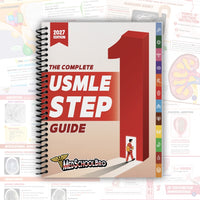
Our Complete USMLE Step 1 Bundle was built to be the ultimate companion to your study guide. We’ve stripped away the fluff and organized the "must-know" information into a format that’s actually digestible.
Stop guessing if you’re studying the right things. Secure your pass and move one step closer to your residency match.